Posted by: michaeldmetzger | October 16, 2018

Process Philosophy, Sustainability and Social Connectedness

I’ve recently become aware of the writings of Alfred North Whitehead,  Mathematician and author of Principia Mathematica, and Harvard Philosopher.  Some more familiar with his works suggest his greatest contribution to modern philosophy is the founding of Process Philosophy.  The idea that reality can only be understood as a process which is related to other processes.
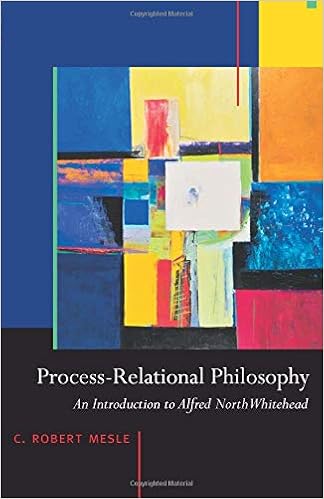
In fact, Whitehead describes any entity as in some sense nothing more and nothing less than the sum of its relations to other entities – its synthesis of and reaction to the world around it.[98]  -Wikipedia (in reference to Alfred North Whitehead, Symbolism: Its Meaning and Effect)

This is a profound departure from Cartesian Dualism and its implicit scientific materialism and reductionist logic.  It comes at a time when there would appear to be an urgent need to understand the human experience from a systems thinking perspective that acknowledges the relational aspect of existence.  Process Philosophy would seem to have a potentially profound influence on addressing current problems of ecology, economy, and education.  The dominant philosophy of scientific materialism has created an unsustainable world, both the physical and social.  Natural ecological systems are beyond the breaking point, while social capital and civil discourse seem to be distant memories from a by-gone era.

My Community and Quality of Life blog entry recounts a fall morning walk with my daughter, as we enjoy the beauty of the craftsman homes that lined our neighborhood on our way to her school.   The entry speaks to a nostalgia for a time when homes were vibrant symbols of arts and crafts, and beauty for it’s own sake, as opposed to their economic instrumentality.

I hope Professor Whiteheads philosophy has the promised impact proponents suggest. Ideas have consequences – I can only hope.


See communityandqualityoflife.blogspot.com.

For the past three weeks I have had the privelege of leading a course on sustainable business in Latin America at INCAE Business School in Costa Rica for visiting students from the Ross School of Business at the University of Michigan.  I have great respect for both institutions as I have been on faculty at both and currently serve on the faculty at INCAE Business School.  Both schools have always been on the leading edge of businesses’ relationship with the environment and innovation in the area of sustainability.

This week we studied some social entrepreneurs who are creating both social and economic value for the people they employ, and more importantly, doing so in a way that is not just less harmful to the environment, but beneficial to the environment.  Irupana in the Bolivian Altiplano preserves the immense bio-diversity of the rugged Andean landscape while employing rural Andean campesinos.  In the process of organic farming they also preserve an ancient means of cultivating these indigineous highly nutritious plants, part of a sacred and ancient culture.  Costa Rican Entomological Supplies (CRES) similarly employs rural Costa Ricans as butterfly farmers, providing environmentally friendly and economically viable work where few options for gainful employment exist.  These butterfly farmers too are abandoning farming practices that require deforesting rural areas and the planting of non-indigenous plants.  CRES helps butterfly farmers recapture the indigenous flora and fauna thereby promoting the preservation of the immense natural biodiversity of Costa Rica’s many microclimates that allow for the amazing diversity of butterflys found there.

These are two social entrepreneurs with an eye for economically, socially, and environmentally sustainble business models.  While these models, butterfly farming, or organic farming of highly nutritious real quinoa (found only in the Bolivian Altiplano) are not widely replicable, such that they make a significant reduction in global poverty, we still have something to learn from these unique social entrepreneurs.  Perhaps the most important lesson is that “local solutions for local problems” usually provide the best answer to severe poverty.  These answers are not necessarily found in a Washington think tank, but in the people who live in the these areas, and see the potential in their unique local context.

Please check these organizations out on the web.  Let me know what you think!

Michael D. Metzger

INCAE Business School, Costa Rica

Bjorn Lomborg, adjunct professor at the Copenhagen Business School, offers an intelligent departure from the alarmist rhetoric that accompanies most climate science conversations and policy debates in his latest book, Cool It (2010), a condensed version of his more academic tome, The Skeptical Environmentalist (2001).  For questioning the conventional wisdom of reducing carbon emissions to slow global warming Lomborg has been demonized by those warning of an impending and irreversible climate catastrophe and irreparable loss of biodiversity.

Lomborg contributes a much needed cool and rational voice to what all acknowledge, Lomborg included, as a serious problem, which is global warming.  That anthropogenic (human caused) climate change is occurring and the human consequences are serious is an understatement, not to mention the steady loss of biodiversity.  But are massive and expensive greenhouse gas reduction policies the answer?  Lomborg says “no”.  He provides data and analyses to suggest that these policies (e.g. Kyoto protocol) are the most expensive public policy initiative in the history of human kind, and in fact a waste of public resources.  Lomborg’s economic cost-benefit analysis shows they provide a poor return on investment.

While Lomborg’s data is exhaustive and his analyses extensive and decisions must certainly be made as to where to invest limited resources as countries deal with rising temperatures and the consequences of climate change, we should be careful to not legitimize the sustainability movement solely on the basis of economic models and cost-benefit analyses.  Biodiversity and the earth’s magnificent ecological systems should be preserved for their inherent value, not because of a price tag some economist puts on them.  This argument, however, is unlikely to satisfy Lomborg or others needing hard numbers to justify the existence of a rainforest.

Fortunately there is an emerging field of ecosystem services accounting that calculates the value of natural capital.  Natural capital refers to ecosystems which provide such environmental services as food production (such as crops, livestock, fisheries, etc.), regulation of natural resources (such as clean air, water, and climate), genetic resources (such as biochemical and pharmaceuticals), and even cultural services such as the aesthics of a Costa Rican rainforest enjoyed by tourists.  Robert Costanza et al. (1987) published a seminal article in Nature that valued the world’s total ecosystem services at $33 trillion dollars, a number more than twice that of the world’s global gross product for that year!  The fact is that our modern economy can not function without these ecosystem services.

Some weeks ago I led a course on Sustainable Development in Latin America for students from UCLA’s Anderson School of Management.  There is no substitute for observing these ecosystems at work first hand and taking time to contemplate nature’s biodiversity.  We observed that the rainforest is surprisingly efficient in its use of  natural capital, and the diversity of its exotic inhabitants astounding.  These wonders defy economic analysis.

Instead, be quiet, watch, listen, and learn from natures genius.   And of course enjoy!  But above all, protect and preserve for future generations, so they may do likewise.

Michael D. Metzger

Cool It: The Skeptical Environalmentalist's Guide to Global Warming, by Bjorn Lombord


This is a fantastic book that reconsiders the role of design in industrial ecology.  The authors describe design that creates organizations that we do not need to continually monitor and regulate because they or the products they produce are so harmful to life (though some regulation is always necessary… not an anti-regulation book), but organizations of which we would genuinely like to see more!

McDonough and Braungart, architect and chemist respectively, imagine buildings that are like trees and cities that are like forrests.  In other words, an industrial complex that respects the planet and biosphere – which we are reminded is a closed system – with nothing getting in or out, but the occassional stray meteor.  The authors warn that unless a new industrial design agenda that promotes eco-effectiveness is embraced, as opposed to mere eco-efficiency, a flawed paradigm that falls short of being good (“still bad, just less so”), the planet will become a giant garbage dump, a literal coffin for life as we know it.

While this book advocates sustainability, it is not about being sustainable, but going beyond mere sustainability and creating positive environmental, social and economic externalities, the kind of which society cannot get enough. The organizations that McDonough and Braungart envision do not mitigate harm, but make the world a better place.  Their imagination of the possible is equalled by their impressive intellectual and philosophical treatment of design as seen in nature and applied to industrial ecology.  Their vast experience in design leaves the reader inspired by what they have already been able to accomplish and hopeful for the promising new philosophical direction these visionary designers have set.

Michael D. Metzger

Cradle to Cradle: Remaking the Way We Make Things, by W. McDonough and M. Braungart

This beautiful book is about the genius of nature and what we have to learn from 3.8 million years of R&D. The true value of nature is not what we can extract from her, but what we can learn from her. This book is a philosophical home coming for anyone that wishes the human species might inhabit this planet we call home gracefully and in harmony with nature for future generations to come.We have been here only 200,000 years. That makes us but toddlers. Though optimistic and inspiring Benyus writes, “we are toddlers playing with matches.” We must learn quickly from our elders, before they disappear entirely from this planet we call home. It is not ours alone.

Michael D. Metzger

Posted by: michaeldmetzger | September 9, 2007

Welcome to Enterprise for Social Change

Welcome to Enterprise for Social Change!  This blog aspires to bridge social change theory and business and organizational theory with the real world practice of Social Entrepreneurship.  The private sector organization combined with appropriately regulated open markets has been a powerful force for improving the standard of living and quality of life within many communities.  More recently the market place has become recognized by a number of visionary entrepreneurs as a forum for promoting positive social change in society.  The visionary individuals behind these social enterprises have been termed social entrepreneurs.

My hope is to highlight these inspirational individuals and their organizations and reflect on what social enterprise and the social entrepreneur means for our economy, society, and conception of the market place.

Thanks for visiting!  I hope to see you here again in the future!

Michael D. Metzger

Michael Metzger is a professor at the INCAE Business School in Costa Rica.  His research and teaching interests focus on the interdisciplinary fields of Sustainability, Social Enterprise and Social Marketing.  Michael has a Ph.D. and M.A. in Education from the University of Michigan and an M.B.A. from the University of Toledo.

Michael researches and writes about those private citizens who through their entreprenuerial ventures, whether they be public, private, or non-profit organizations, bring about positive social change and contribute to improving the quality of life within our society.  Michael readily acknowledges the essential role good goverment plays in maintaining well functioning markets and providing for sound business enterprises as well as civil society organizations.

Categories

Design a site like this with WordPress.com
Get started